




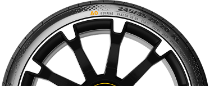
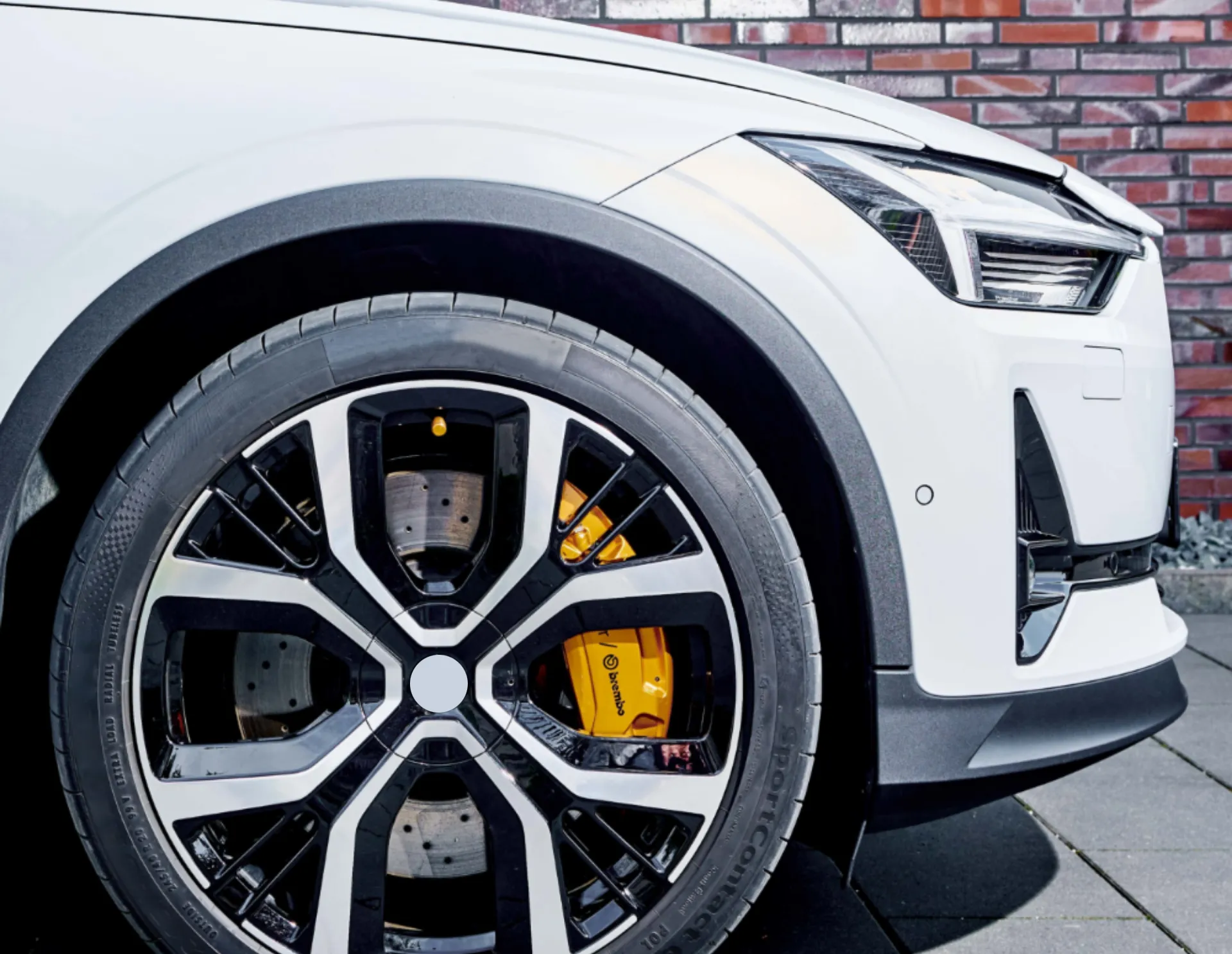
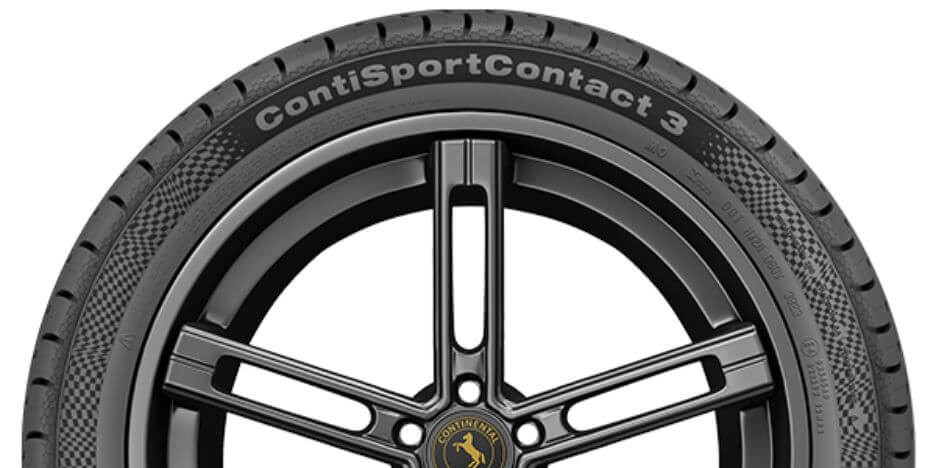
The Continental ContiSportContact 3 is an ultra-high-performance summer tire launched in 2006. It was engineered specifically for sports coupes, luxury sedans, and high-output vehicles that demand precise steering response, short braking distances, and confident cornering on both dry and wet road surfaces. Nearly two decades after its introduction, this tire remains in production and continues to attract drivers who prioritize dry grip and handling precision over touring comfort.
In Qatar, where long straight highways meet high ambient temperatures and occasional concentrated rainfall, the question of whether the ContiSportContact 3 still holds its performance value deserves a detailed, factual answer. This blog examines what the tire does, where it performs, where it has limitations, and how it compares to Continental's current generation options.
What the ContiSportContact 3 Was Engineered to Do
The ContiSportContact 3 was built around a specific performance philosophy: maximize dry traction and braking precision while maintaining sufficient wet-road competence for real-world driving conditions. Continental achieved this through four core engineering decisions embedded in the tire's construction.
The tire uses an asymmetric tread pattern with differentiated inner and outer tread zones. The outer shoulder carries large, solid tread blocks connected by a continuous circumferential rib. This outer zone handles the majority of cornering load when the vehicle rolls during a turn, generating lateral grip through a stiff, deformation-resistant contact patch. The inner zone carries a more open tread design with lateral channels and sipes that manage water evacuation and maintain grip on wet surfaces.
Intermediate ribs run between the tread zones and serve a dual function. They absorb the braking forces that compress the tire's contact patch under hard deceleration, and they maintain tread block stability under the centrifugal loading generated at high speeds. The result is a tire that resists the tread squirm and block flex that longer stopping distances under emergency braking produce.
Four wide longitudinal grooves channel water away from the contact patch at speed. These grooves, combined with the inner tread's lateral channels, give the ContiSportContact 3 meaningful aquaplaning resistance relative to its performance classification. Independent German magazine tests rated the tire as delivering short wet braking distances and balanced handling in both dry and wet conditions, with AutoBild Sportscars granting it a "recommended" verdict in the 2011 summer tire test.
The tire is available with Self-Supporting Runflat (SSR) technology on select sizes. SSR uses a reinforced sidewall construction that prevents the tire from collapsing onto the rim after a puncture, allowing continued driving at up to 80 km/h for a limited distance. For Qatar drivers who cover long distances on highways between Doha, Al Wakrah, and Al Khor, the SSR option removes the immediate need for roadside tire changes after a puncture event.
Dry Performance: What the Asymmetric Design Delivers in Qatar
Qatar's road network presents conditions that match the ContiSportContact 3's primary design brief precisely. The Al Shamal Road, Salwa Road, and Doha Expressway deliver long, high-speed straight sections where dry traction and stability at speed are the dominant performance requirements. Qatar's dry conditions persist for 9 to 10 months of the year, meaning a tire that excels on dry, hot asphalt delivers its maximum value across the majority of annual driving.
The ContiSportContact 3's asymmetric tread generates its dry grip advantage through contact patch geometry. The outer shoulder's continuous rib keeps rubber in direct, uninterrupted contact with the road surface through the full arc of a corner. Drivers report that the steering response is immediate and communicative. Turn-in precision is high, allowing drivers to place the car confidently through fast bends without the delayed response that softer touring compounds create.
Braking distance is where the intermediate rib design shows its clearest measurable benefit. By absorbing deceleration forces across the full tread width rather than concentrating them at individual block edges, the ContiSportContact 3 maintains a uniform contact patch shape under hard braking. This stability translates directly into shorter stopping distances on dry asphalt, which is a safety attribute for Qatar's high-speed driving environment where emergency braking situations require maximum stopping power.
The tire's heat-resistant rubber compound maintains traction consistency even as Qatar's summer road surface temperatures climb. The compound does not soften excessively under sustained thermal load, preserving the tread block geometry that makes dry grip reliable across a full summer journey.
Wet Performance: Managing Qatar's Seasonal Rain Events
Qatar receives most of its annual rainfall between December and April, concentrated in short, intense events. When rain falls on roads that have accumulated months of oil, dust, and sand residue from Qatar's desert environment, the first minutes of contact create acutely slippery conditions. Aquaplaning risk is highest during these brief but intense rain episodes, not during prolonged steady rainfall.
The ContiSportContact 3's four wide longitudinal grooves address this directly. These grooves function as dedicated water channels that carry accumulated surface water away from the footprint at speed. The unique groove geometry, which Continental specifically engineered to increase water clearance volume, maintains rubber-to-asphalt contact even when surface water accumulates rapidly during sudden downpours.
Wet braking performance consistently earns positive ratings in independent tests. AutoBild and auto motor and sport both recorded short wet braking distances in their respective test programs, positioning the ContiSportContact 3 above average in wet stopping performance for its performance class.
Where the tire has limitations in wet conditions is at its performance boundary. Drivers pushing the tire aggressively in cold, wet conditions or through standing water at very high speeds report that the wet grip margin is narrower than its dry grip margin. Qatar's rain events rarely produce sustained cold wet roads, which means this limitation is less frequently encountered than in European climates. In Qatar's specific climate context, the ContiSportContact 3's wet performance is adequate for the conditions drivers realistically face.
How the ContiSportContact 3 Compares to Current Continental Performance Tires
The ContiSportContact 3 has been superseded in Continental's lineup by the SportContact 5 and then the SportContact 7, launched in 2021. Understanding how these generations relate to the ContiSportContact 3 gives Qatar drivers a clearer picture of the choice they are making.
The SportContact 7 is Continental's current benchmark for dry performance. It wins dry braking comparisons by measurable margins in independent tests, including a 2.6 meter shorter stopping distance compared to the Michelin Pilot Sport 5 in Auto Express testing. Its wet grip ratings cover 93% of available sizes with an A rating on the EU tire label, compared to the ContiSportContact 3's older compound generation. The SportContact 7 represents a clear step forward in both dry and wet performance over the ContiSportContact 3.
The ContiSportContact 3, however, retains two meaningful advantages in specific scenarios. First, it remains an OEM fitment for several vehicle models, including Porsche Cayenne, BMW, and Audi A4 Quattro variants, meaning replacement drivers who want to maintain factory-specification tire character find it directly relevant. Second, its price point is substantially lower than the SportContact 7, making it a competitive option for performance drivers who want a genuine UHP tire without the premium cost of the latest generation.
For Qatar drivers who want to explore Continental's current performance tire lineup, the Continental SportContact 7 delivers the highest dry braking and cornering performance available in Continental's range today.
Is the ContiSportContact 3 Still Relevant for Qatar's Performance Drivers?
The ContiSportContact 3 remains a technically capable performance tire in 2025. Its asymmetric tread design, solid outer shoulder block construction, and intermediate braking ribs deliver genuine UHP performance attributes that standard touring tires cannot match. In Qatar's predominantly dry, hot climate, these dry performance characteristics have maximum utilization value across 9 to 10 months of the year.
The tire is best suited for performance-oriented sedan and sports coupe drivers in Qatar who currently run the ContiSportContact 3 as an OEM fitment and are replacing worn tires with the same specification. It is also suitable for drivers who want measurably better dry performance than all-season or grand touring tires at a lower cost than the SportContact 7.
Drivers who want Continental's most advanced current performance technology should use the Tire Finder on the Qatar website to locate SportContact 7 fitments for their vehicle. For those considering the ContiSportContact 3 as a replacement, verifying size availability through the same tool confirms current stock across Qatar's authorized dealer network.
To understand how Continental tire technologies apply across different driving conditions in Qatar, the Tire Knowledge and Safety section covers buying guidance, tire basics, and driving situation-specific advice. Authorized Continental dealers across Doha, Al Rayyan, and Lusail are listed on the Dealer Locator for professional fitment, balancing, and alignment services.
Conclusion
The ContiSportContact 3 is not the most advanced performance tire Continental produces in 2025. The SportContact 7 surpasses it in both dry braking precision and wet grip ratings, representing nearly two decades of compound and tread design development beyond the SportContact 3's 2006 engineering baseline.
What the ContiSportContact 3 remains is a proven, honest ultra-high-performance summer tire with specific construction attributes that still deliver genuine value for Qatar's performance driving environment. Its asymmetric tread generates real cornering stability. Its intermediate braking ribs produce measurably short stopping distances on dry asphalt. Its four wide longitudinal grooves provide adequate aquaplaning resistance for Qatar's concentrated rain events. Its heat-resistant compound maintains traction consistency across Qatar's long summer season.
For a driver who already runs the ContiSportContact 3 and wants a like-for-like replacement, it is still the correct choice. For a driver selecting a new performance tire with no existing fitment constraint, the SportContact 7 delivers the best current performance Continental offers. Either way, the decision starts with matching tire capability to the specific demands Qatar's roads and climate create, and the ContiSportContact 3 still passes that test for the driver profile it was built to serve.